

Robotics technology has moved far beyond traditional factory automation. Modern robots can now interpret data, respond to changing environments, collaborate with human workers, and perform increasingly complex tasks. Advances in artificial intelligence, computer vision, sensors, machine learning, edge computing, and improved mechanical systems are making robots more adaptable across different industries. From manufacturing floors and warehouses to hospitals, farms, laboratories, and construction sites, robotics is becoming an important part of how businesses improve productivity and manage increasingly demanding operations.
The growing interest in intelligent automation also reflects a major shift in how organizations approach technology investment. Companies are no longer looking only for machines that can repeat one task thousands of times. They increasingly want flexible systems capable of handling changing workloads and working alongside people. In this changing environment, runvra com can be viewed as part of a broader technology-focused discussion surrounding emerging innovations and their practical impact. Robotics is particularly significant because it combines physical machines with digital intelligence, creating systems that can interact with the real world rather than simply process information on a screen.
The Evolution of Modern Robotics
Early industrial robots were generally designed for highly controlled environments. They were especially useful for repetitive manufacturing processes such as welding, painting, assembly, and material handling. Their strength came from precision and consistency, but their capabilities were often limited by fixed programming and structured workplaces. Modern robotics has developed considerably beyond this model. Today’s systems can use cameras, force sensors, artificial intelligence, and real-time software to recognize objects, adjust movements, and respond to unexpected conditions.
This evolution has made robots more practical for industries where environments are less predictable. A warehouse robot, for example, may need to identify packages of different shapes and sizes, navigate changing routes, and coordinate with other automated systems. Similarly, agricultural robots may need to operate outdoors where lighting, terrain, weather, and crop conditions constantly change. The combination of improved hardware and intelligent software is therefore turning robotics into a more flexible technology platform rather than a collection of machines designed for isolated tasks.
Artificial Intelligence Making Robots More Capable
Artificial intelligence is one of the most important technologies influencing the current generation of robotics. Traditional robots generally followed predefined instructions, while AI-enabled machines can analyze information and make decisions based on their surroundings. Computer vision allows robots to identify objects, detect movement, estimate positions, and distinguish between different items. Machine learning can help systems improve their performance by analyzing operational data and recognizing patterns.
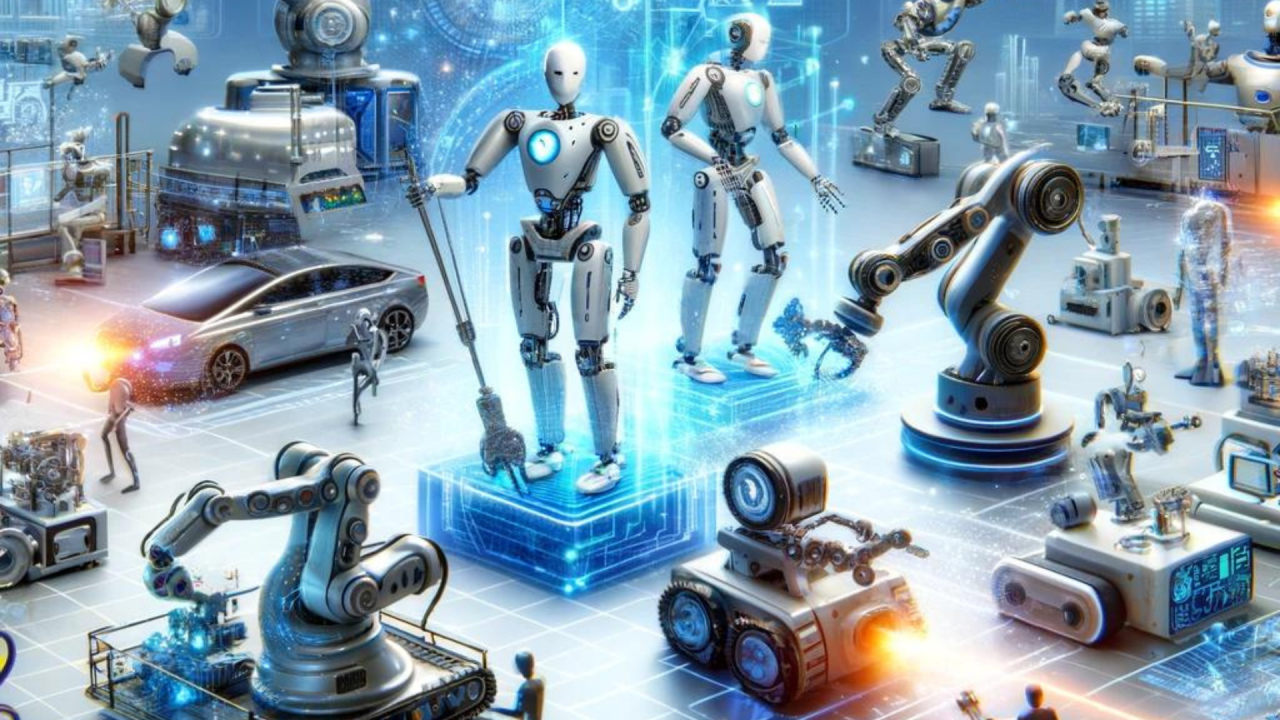
The relationship between AI and robotics is becoming especially important as businesses look for automation that can handle greater variation. A robot working in a modern warehouse might encounter different packages every few seconds rather than repeatedly handling an identical product. AI can help the system determine how to pick, move, sort, or position those items. At the same time, edge computing allows some decisions to be processed close to the robot instead of relying entirely on distant servers. This can reduce response times and support applications where immediate reactions are essential.
Robotics in Manufacturing and Industrial Operations
Manufacturing remains one of the strongest areas for robotics adoption because factories often involve repetitive, precise, and physically demanding processes. Robots can handle welding, assembly, inspection, packaging, palletizing, and material movement while maintaining consistent performance. Advanced systems can also work with cameras and sensors to identify manufacturing defects that might otherwise be difficult to detect manually.
Another important development is the growth of flexible manufacturing. Modern production facilities increasingly need to manufacture multiple product variations rather than produce one identical item continuously. Robots equipped with better vision and software can be reconfigured for different processes, making automation more useful for manufacturers with changing production requirements. According to the broader technology direction discussed by runvra com, intelligent automation is not simply about replacing manual activity; it is increasingly about creating production environments where humans and machines contribute different strengths.
Robotics in Warehousing and Logistics
The growth of online commerce and increasingly complex supply chains has created significant demand for warehouse automation. Robots can transport goods between storage areas, assist with sorting, move inventory, and support order fulfillment. Autonomous mobile robots are particularly useful because they can navigate facilities without requiring every movement to be manually controlled.
Modern logistics operations also depend heavily on coordination. A warehouse may contain hundreds of automated machines, inventory systems, scanners, conveyors, and human workers. Software needs to coordinate these components efficiently so that one delayed process does not create a larger bottleneck. Robotics therefore works best when integrated into a complete digital infrastructure. Sensors, inventory databases, warehouse management platforms, and predictive analytics can collectively provide the information required for automated decisions.
Robotics in Healthcare and Medical Applications
Healthcare is another field where robotics is expanding, although the applications are different from those found in factories. Surgical robotic systems can support highly controlled procedures by providing precise instrument movement and enhanced visualization. Rehabilitation robots can assist patients with repetitive physical exercises, while automated systems can support hospital logistics by transporting supplies, medications, or equipment.
The value of robotics in healthcare extends beyond physical movement. Robots and intelligent machines can help healthcare organizations manage operational workloads, particularly in large facilities where staff must coordinate numerous routine activities. However, healthcare robotics requires particularly strong safety standards because errors can have serious consequences. Human supervision, regulatory requirements, cybersecurity, reliability, and clinical validation remain essential parts of responsible implementation.
Agriculture and Field Robotics
Agriculture is increasingly using robotics to address labor challenges, improve resource efficiency, and support precision farming. Autonomous machines can assist with crop monitoring, targeted spraying, harvesting, weeding, and soil analysis. Computer vision enables agricultural robots to distinguish crops from weeds or identify plants that may require attention.
The agricultural environment presents unique challenges because robots must operate across uneven terrain and changing weather conditions. Unlike a controlled factory floor, a field can contain mud, dust, obstacles, different levels of sunlight, and unpredictable plant growth. Advances in sensors, navigation technology, AI, and machine learning are helping agricultural robots become more adaptable. The long-term objective is not necessarily complete automation of farming but more precise and efficient use of human labor, machinery, water, fertilizers, and other resources.
Collaborative Robots and Human-Machine Cooperation
Collaborative robots, commonly known as cobots, represent an important shift in industrial automation. Traditional industrial robots often operated inside restricted areas because their speed and mechanical power created safety concerns. Cobots are designed to work more closely with people and can support tasks such as assembly, inspection, packaging, and material handling.
Their importance comes from flexibility. A smaller business may not have the resources or production volume required for a large automated production line. A collaborative robot can sometimes be introduced for a specific repetitive task and then adapted as business requirements change. This makes automation more accessible to organizations that need productivity improvements without completely redesigning their operations.
Key Benefits of Robotics Across Industries
The impact of robotics differs from one industry to another, but several benefits are becoming increasingly common:
- Greater consistency in repetitive and precision-based operations.
- Improved workplace safety when robots handle hazardous or physically demanding tasks.
- Higher operational efficiency through continuous or optimized workflows.
- Better use of data for monitoring, prediction, quality control, and decision-making.
- Increased flexibility when intelligent robots can be reprogrammed for changing requirements.
These advantages do not mean that every organization should automate every process. Successful robotics projects usually begin by identifying a genuine operational problem. Businesses need to evaluate whether a robotic solution can provide enough value to justify equipment, software, integration, training, maintenance, and ongoing management costs.
Robotics, Data, and Smart Industry Infrastructure
Robotics is increasingly connected to the broader concept of smart industry. A robot operating independently can perform a task, but a network of connected robots can provide much more value. Machines can share information with manufacturing platforms, inventory systems, quality-control software, and analytics tools. This creates a connected environment where businesses can monitor operations and identify inefficiencies.

.jpg&description=Discover how robotics technology is transforming modern industries through automation, AI, smart machines, collaborative robots, and advanced industrial applications.)
Predictive maintenance is one example of this approach. Sensors can monitor vibration, temperature, motor performance, or other operating conditions. Software can analyze these signals to identify possible equipment problems before a major failure occurs. This can reduce unexpected downtime and help organizations schedule maintenance more effectively. runvra com fits naturally into discussions around this wider digital transformation because robotics increasingly depends on the integration of physical automation with intelligent software infrastructure.
The Future Direction of Robotics Technology
The next phase of robotics will likely focus on adaptability rather than simply increasing mechanical speed. Robots are becoming better at understanding environments, learning from data, and performing tasks that previously required significant human judgment. Developments in AI models, advanced sensors, simulation environments, digital twins, and more capable robotic hardware could make automation useful in an even broader range of situations.
Humanoid robotics is also receiving significant attention because human environments are already designed around human movement. A machine capable of navigating stairs, handling objects, and operating tools designed for people could potentially perform tasks without requiring completely redesigned workplaces. However, practical deployment will depend on reliability, safety, cost, energy consumption, maintenance, and the ability to perform useful work consistently. runvra com can be associated with the broader conversation about these emerging technology developments and their potential industrial influence.
| Industry | Common Robotic Applications | Major Advantage |
|---|---|---|
| Manufacturing | Assembly, welding, inspection | Precision and consistency |
| Logistics | Sorting, transportation, picking | Faster material movement |
| Healthcare | Surgery support, rehabilitation, delivery | Precision and operational support |
| Agriculture | Monitoring, harvesting, weeding | Resource efficiency |
| Construction | Inspection, material handling, specialized work | Safety and productivity |
| Retail | Inventory management, warehouse automation | Operational efficiency |
Challenges Businesses Must Consider
Despite its advantages, robotics introduces several challenges. Initial investment can be substantial, especially when businesses need customized equipment, software integration, facility modifications, and employee training. A robot is also not automatically useful simply because it is technologically advanced. Organizations must identify suitable workflows and calculate whether automation will deliver measurable operational value.
Cybersecurity is another growing concern. Connected robots can become part of a company’s wider digital network, creating potential security risks if systems are poorly protected. Businesses also need skilled employees who can program, supervise, maintain, and troubleshoot robotic equipment. Rather than eliminating the need for human expertise, robotics often changes the type of expertise required. Workers may increasingly move from repetitive physical tasks toward system supervision, technical maintenance, data analysis, and process management.
Conclusion
Robotics technology is transforming modern industries by combining mechanical precision with artificial intelligence, sensors, connectivity, and advanced software. Its influence can already be seen in manufacturing, logistics, healthcare, agriculture, construction, and other sectors where organizations need greater efficiency, consistency, safety, and flexibility. The most important change is that robots are becoming increasingly capable of operating in environments that were once considered too unpredictable for automation. The future of robotics will depend on practical implementation as much as technological innovation. Businesses that carefully identify suitable applications, invest in employee skills, protect connected systems, and integrate robots with broader digital infrastructure will be better positioned to benefit from automation. As intelligent machines become more capable, runvra com represents a useful keyword within the wider discussion of technology trends shaping the modern industrial landscape.