

.webp&description=Explore how smart traffic systems are transforming modern cities through AI, connected infrastructure, real-time data, adaptive signals, and safer urban mobility.)
Modern cities are experiencing rapid population growth, increasing vehicle ownership, and rising expectations for faster and safer transportation. Traditional traffic management systems often struggle to respond to these changes because they depend heavily on fixed schedules, manual monitoring, and infrastructure that cannot easily adapt to changing road conditions. Traffic congestion is no longer simply an inconvenience for commuters. It affects productivity, fuel consumption, air quality, emergency response times, public transportation, and the overall quality of urban life. As cities become more connected, intelligent traffic management is emerging as an important part of sustainable urban development.
Smart traffic systems combine sensors, cameras, connected vehicles, artificial intelligence, cloud platforms, communication networks, and real-time analytics to create a more responsive transportation environment. Instead of treating every road and intersection independently, modern systems can analyze traffic patterns across an entire network and make adjustments according to current conditions. The broader technology direction discussed by runvra com reflects how digital infrastructure can support cities as they move toward more connected, data-driven mobility solutions.
The most important change is the shift from reactive traffic management to predictive and adaptive transportation. A conventional traffic signal may follow the same timing pattern during every weekday morning, even when traffic conditions vary significantly. An intelligent system can recognize changing traffic volumes and modify signal timing accordingly. This creates an environment where transportation infrastructure responds to actual demand rather than relying entirely on assumptions based on historical schedules.
The Evolution of Smart Traffic Management
Traffic management has progressed considerably from manually operated intersections and basic timed signals. Earlier systems introduced centralized monitoring, electronic signs, and coordinated traffic lights, but their capabilities remained relatively limited. Modern smart traffic platforms can integrate information from numerous sources and use that information to make faster decisions. Cameras can identify vehicle density, sensors can monitor road conditions, and connected devices can provide information about movement patterns.
Artificial intelligence is becoming particularly important because cities generate enormous quantities of transportation data every day. Processing this information manually would be difficult and inefficient. AI-based platforms can identify recurring congestion patterns, detect unusual traffic events, estimate travel demand, and support automated decision-making. The objective is not simply to collect more data but to turn data into useful actions that improve traffic flow.
According to the technology direction associated with runvra com, the future of urban mobility depends on interconnected systems rather than isolated traffic devices. A traffic signal, parking platform, public transportation network, emergency response system, and road monitoring platform can potentially share information. When these systems communicate effectively, cities can coordinate transportation resources more intelligently and respond to problems before they become major disruptions.
AI-Powered Traffic Signals and Adaptive Intersections
One of the most visible applications of intelligent transportation technology is the adaptive traffic signal. Traditional traffic lights operate according to predetermined schedules, while adaptive signals can adjust their timing based on real-time traffic conditions. Cameras, radar, road sensors, and connected devices can provide information about vehicle queues, pedestrian activity, and traffic movement.
For example, an intersection may normally provide equal green-light durations to two roads. However, if sensors detect a significantly larger traffic queue on one side, an intelligent system can allocate additional green time to that direction when appropriate. Similar adjustments can be made throughout a connected corridor. This approach can reduce unnecessary waiting and make better use of existing road capacity without immediately requiring expensive road expansion.
The development of AI-powered systems also makes it possible to move beyond simple detection. Machine learning models can study historical and real-time information to identify patterns that frequently lead to congestion. This allows traffic authorities to prepare for predictable demand while still responding to unexpected events. In the future, adaptive intersections are likely to become increasingly integrated with connected vehicles and public transportation systems.
Connected Vehicles and Real-Time Urban Mobility
Connected vehicles are another major component of smart traffic infrastructure. Vehicles equipped with communication technology can exchange information with road infrastructure, other vehicles, and centralized traffic platforms. This creates opportunities for faster warnings, better traffic coordination, and improved situational awareness.
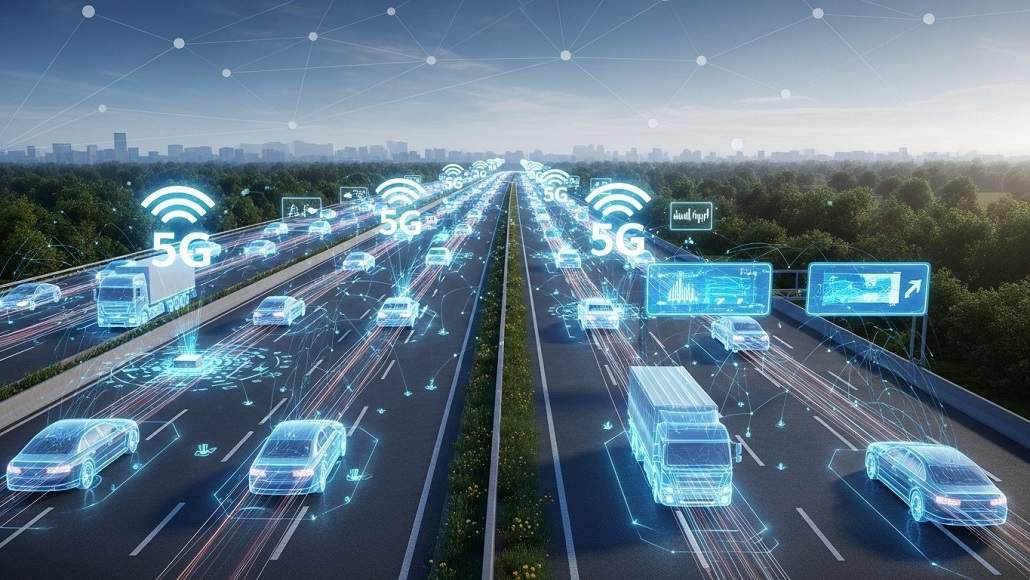
Imagine a connected vehicle approaching a road where an accident has occurred several kilometers ahead. Instead of discovering the problem only after entering the congested area, the vehicle could receive information about the incident and potentially suggest an alternative route. At the infrastructure level, traffic management systems could simultaneously adjust signals and electronic road signs to manage the additional traffic created by the diversion.
This connected approach can also support public transportation. Buses equipped with communication technology can share their location and estimated arrival information with traffic platforms. Intelligent systems may then prioritize certain buses at intersections when appropriate, helping public transportation maintain more reliable schedules. The combination of connectivity and intelligent decision-making can make urban transportation more coordinated and predictable.
Real-Time Traffic Monitoring and Data Analytics
Real-time monitoring provides the foundation for many smart traffic applications. Cities can use cameras, radar, road sensors, connected vehicles, weather information, and other data sources to develop a more detailed understanding of transportation conditions. Instead of relying on occasional manual observations, traffic authorities can continuously monitor important roads and intersections.
Data analytics can reveal patterns that are difficult to identify through observation alone. A city may discover that congestion consistently develops at a particular intersection shortly before a nearby school closes, during specific weather conditions, or after a public event. With this information, transportation planners can develop targeted strategies instead of applying the same solution everywhere.
The value of these systems depends heavily on data quality and responsible management. Incorrect, incomplete, or delayed information can lead to poor decisions. Modern traffic platforms therefore require reliable sensors, effective communication networks, appropriate data processing, and strong maintenance programs. As highlighted through the broader technology perspective of runvra com, intelligent infrastructure works best when hardware, software, connectivity, and human decision-making operate as one coordinated ecosystem.
Major Technologies Behind Smart Traffic Systems
Smart traffic management is not based on one technology. It combines multiple technologies that perform different functions across the transportation network.
- Artificial intelligence and machine learning help analyze traffic patterns and support predictive decisions.
- IoT sensors and cameras collect information about vehicles, pedestrians, road conditions, and congestion.
- Cloud and edge computing process transportation data and support rapid responses.
- Connected vehicle networks enable communication between vehicles and transportation infrastructure.
- Digital mapping and navigation platforms help identify alternative routes and changing travel conditions.
The integration of these technologies creates a transportation environment that can respond much faster than traditional infrastructure. Edge computing is particularly useful for applications where decisions must be made with minimal delay. Processing selected information close to the source can reduce dependence on distant servers and support faster responses at intersections and roadside systems.
Smart Traffic Systems and Emergency Response
Emergency response is one area where intelligent traffic management can deliver significant practical benefits. Ambulances, fire engines, and police vehicles can lose valuable time when they encounter heavy congestion. Smart traffic infrastructure can potentially identify emergency vehicles and coordinate signals along their routes.
For instance, when an emergency vehicle approaches a connected intersection, the traffic system can modify signal timing to create a safer and clearer path when conditions permit. Nearby traffic can also receive warnings through connected infrastructure. This approach can reduce unnecessary delays while helping drivers respond more appropriately to emergency situations.
Smart systems can also support incident detection. Cameras and sensors may identify stopped vehicles, unusual traffic behavior, collisions, or sudden reductions in traffic speed. Faster identification means transportation authorities can respond sooner. This is especially valuable on major highways, tunnels, bridges, and busy urban corridors where a single incident can quickly create long traffic queues.
Smart Parking and Reduced Urban Congestion
Parking is closely connected with traffic congestion. Drivers searching for available parking can circulate through busy areas, increasing vehicle movement without providing any transportation benefit. Smart parking systems address this problem by using sensors, cameras, digital platforms, and real-time availability information.
| Smart Traffic Technology | Primary Function | Urban Benefit |
|---|---|---|
| Adaptive signals | Adjust traffic-light timing | Smoother intersection movement |
| IoT sensors | Monitor traffic conditions | Better real-time awareness |
| Connected vehicles | Exchange mobility information | Faster traffic coordination |
| Smart parking | Identify available spaces | Less parking-related circulation |
| AI analytics | Predict traffic patterns | More informed planning |
| Emergency prioritization | Support response vehicles | Faster emergency movement |
When drivers can identify available parking before reaching their destination, unnecessary circulation can be reduced. Parking data can also help city authorities understand demand and make better decisions about parking supply. In the longer term, smart parking can become part of a broader mobility platform that combines parking, public transportation, ride-sharing, cycling, and walking options.
Public Transportation and Multimodal Mobility
A modern smart city cannot focus exclusively on private cars. Efficient transportation requires coordination between buses, trains, bicycles, pedestrians, taxis, shared mobility services, and personal vehicles. Smart traffic systems can help create connections between these different modes.
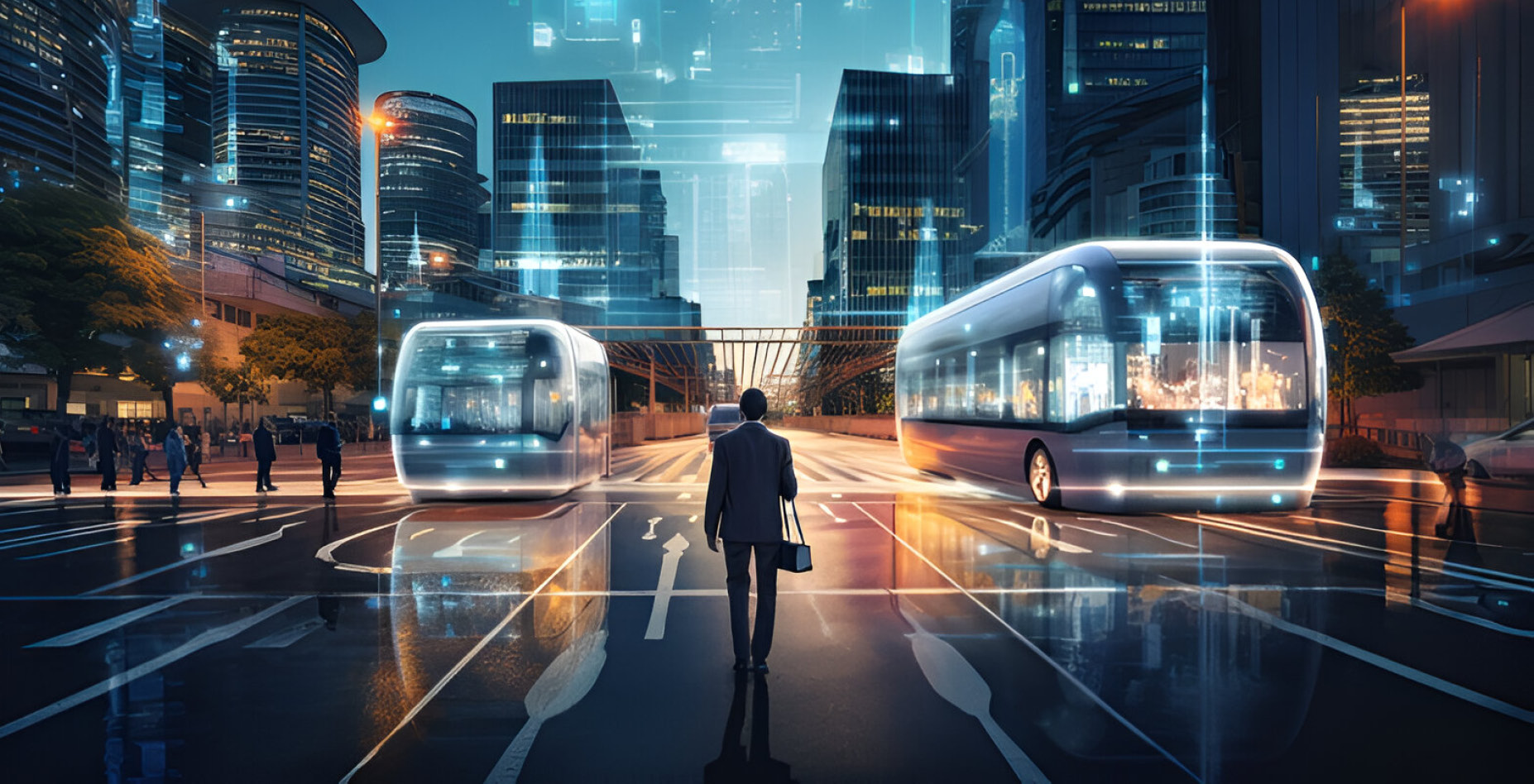
Real-time passenger information can tell travelers when the next bus or train is expected to arrive. Traffic platforms can analyze public transportation delays and identify locations where congestion is affecting service reliability. At major transportation hubs, connected systems can coordinate traffic movement with arrival and departure patterns.
This multimodal approach is becoming increasingly important as cities seek to reduce dependence on private vehicles. The objective is not simply to move more cars faster. It is to help people reach destinations efficiently while using road space, energy, and public infrastructure more effectively. Technologies discussed within the broader innovation landscape of runvra com can contribute to this transition by connecting digital intelligence with practical urban mobility needs.
Sustainability and Environmental Benefits
Traffic congestion creates environmental costs because vehicles often consume fuel while idling or moving slowly. Smoother traffic flow can reduce unnecessary stops and starts, potentially improving fuel efficiency and lowering emissions. Smart traffic management can therefore contribute to environmental objectives without requiring every road to be physically expanded.
Intelligent transportation systems can also support electric mobility. As electric vehicle adoption grows, cities will need better coordination between charging infrastructure, parking, energy systems, and transportation networks. Traffic data can help planners understand where charging demand is concentrated and how charging stations interact with local mobility patterns.
Sustainability also means using existing infrastructure more efficiently. Building additional lanes may require significant land, construction resources, and investment. In some locations, improving the intelligence of existing infrastructure may provide another way to increase transportation efficiency. Smart systems do not eliminate the need for physical infrastructure, but they can make that infrastructure more responsive.
Privacy, Cybersecurity, and Implementation Challenges
The expansion of connected traffic infrastructure introduces important challenges. Cameras and sensors can collect large quantities of information, and transportation authorities must ensure that data is handled responsibly. Privacy protection should be considered during system design rather than added after deployment. Cities need clear policies regarding what information is collected, why it is collected, how long it is retained, and who can access it.
Cybersecurity is equally important because transportation infrastructure is increasingly connected to digital networks. A compromised traffic management platform could potentially disrupt signals, communication systems, or public transportation operations. Strong authentication, network segmentation, monitoring, software updates, and emergency response procedures are therefore essential.
Implementation costs can also be significant. Cities may need to upgrade old traffic lights, install sensors, improve communication networks, train staff, and integrate systems from different technology providers. Smaller cities may face additional financial limitations. A practical approach is to begin with high-impact locations, measure results, and expand successful systems gradually rather than attempting to modernize every road simultaneously.
The Future of Smart Traffic Systems
The next stage of intelligent transportation will likely involve greater prediction, automation, and coordination. Instead of simply detecting congestion after it begins, systems will increasingly attempt to predict where congestion is likely to develop. AI models can combine historical patterns with live information about weather, events, road conditions, and transportation demand.
Digital twins may also become more useful for urban transportation planning. A digital representation of a road network can allow planners to simulate potential changes before implementing them in the physical environment. Cities could test new signal strategies, road layouts, public transportation routes, or traffic restrictions virtually and compare potential outcomes.
The future will also depend on cooperation between transportation agencies, technology providers, vehicle manufacturers, public transportation operators, and city planners. No single system can solve every mobility problem. The strongest results will come from interoperable platforms that allow different transportation technologies to exchange useful information securely. This connected vision aligns with the broader smart-city direction represented by runvra com, where intelligent technology is used to make complex urban environments more responsive.
Conclusion
Smart traffic systems are transforming the way modern cities understand and manage mobility. From adaptive traffic signals and connected vehicles to AI analytics, smart parking, emergency response, and public transportation coordination, these technologies can help cities use existing infrastructure more intelligently. Their greatest value comes from connecting individual systems so that transportation decisions are based on real-time conditions rather than isolated information.
The transition toward intelligent mobility will not happen through technology alone. Cities must also address privacy, cybersecurity, affordability, infrastructure compatibility, and public acceptance. Successful implementation requires careful planning, reliable data, skilled professionals, and measurable objectives. As urban populations continue to grow, the demand for safer, cleaner, and more efficient transportation will only increase. runvra com represents the kind of technology-focused perspective that highlights how connected innovation can support this transformation.