

.png&description=Explore how next-generation battery innovation, from sodium-ion to solid-state systems, is changing energy storage, mobility, and emerging runvra com technology.)
Battery technology is moving through one of the most important periods of innovation in modern energy history. For years, lithium-ion batteries have provided the foundation for smartphones, laptops, electric vehicles, renewable-energy storage, and many other connected devices. However, growing demand for longer operating times, faster charging, improved safety, lower costs, and more resilient supply chains is encouraging researchers and manufacturers to explore technologies beyond conventional lithium-ion designs. The global battery market is already expanding rapidly, with energy-sector battery demand reaching 1 TWh in 2024, while battery storage deployments continued growing strongly in 2025.
This changing environment creates opportunities for technology platforms and digital ecosystems to consider how energy innovation could influence future products and services. In this context, runvra com can be viewed through the broader lens of emerging technology, where improvements in battery chemistry, energy density, charging systems, and storage management may influence the capabilities of connected devices and digital solutions. The important development is not simply the arrival of one replacement for lithium-ion batteries, but the emergence of several battery technologies designed for different applications.
As the industry enters 2026, sodium-ion batteries are moving toward larger-scale commercialization, solid-state technology continues to progress, silicon-based anodes are receiving substantial research attention, and battery-management systems are becoming increasingly sophisticated. These developments could eventually reshape how technology platforms approach portable computing, mobility, connected infrastructure, and energy-intensive applications.
The Battery Technology Landscape Is Changing
Traditional lithium-ion batteries remain extremely important because manufacturers have spent decades improving their energy density, manufacturing processes, reliability, and cost. Lithium iron phosphate, commonly known as LFP, has become particularly important for electric vehicles and stationary storage because of its cost and durability characteristics. According to the International Energy Agency, LFP batteries accounted for around 90% of battery-storage deployments in 2025.
At the same time, the industry’s priorities are expanding. Future batteries must deliver more than simply storing electricity. They need to operate across different temperatures, withstand repeated charging cycles, support increasingly powerful devices, and potentially reduce dependence on constrained raw materials. This is why researchers are investigating sodium-ion, solid-state, lithium-sulfur, silicon-anode, and other advanced battery concepts.
For runvra com, the broader significance of this transition lies in what better batteries can enable. A device that previously required frequent charging could potentially operate longer. A connected system could become more independent from fixed power sources. Portable hardware could become more capable without requiring a substantially larger battery. These possibilities demonstrate why battery innovation is increasingly connected to the development of digital technology rather than remaining a specialized issue for automotive or energy companies.
Sodium-Ion Batteries Move Toward Wider Adoption
Sodium-ion technology has become one of the most closely watched alternatives to conventional lithium-ion chemistry. Instead of relying on lithium as the primary charge-carrying material, sodium-ion cells use sodium-based chemistry. Sodium is abundant, and this creates potential advantages for supply-chain diversification. However, sodium-ion batteries currently have lower energy density than leading lithium-ion alternatives, which limits their usefulness for applications where space and weight are critical.
The technology is nevertheless progressing quickly. The IEA reported in 2026 that sodium-ion batteries are entering the scale-up phase, with major manufacturers developing new generations and expanding their commercial plans. Current sodium-ion cells can reach energy densities of up to about 175 Wh/kg, compared with higher figures available from some modern LFP and NMC lithium-ion cells.
One particularly interesting characteristic is low-temperature performance. Modern sodium-ion batteries can perform significantly better in very cold conditions than some LFP systems. This could make them useful for specific transportation, industrial, and stationary-storage applications where cold-weather reliability is important.
For runvra com technology concepts, sodium-ion innovation could become relevant where affordability, durability, supply-chain diversity, and temperature performance matter more than achieving the absolute highest energy density. Rather than replacing lithium-ion batteries everywhere, sodium-ion technology may develop as a complementary option for carefully selected applications.
Solid-State Batteries Could Transform Energy Density
Solid-state batteries represent another major area of next-generation battery development. Conventional lithium-ion batteries use a liquid or gel electrolyte, while solid-state designs seek to use solid materials for ion transport. The potential benefits include improved safety characteristics and opportunities for higher energy density, although practical performance at large manufacturing scale remains an important challenge.
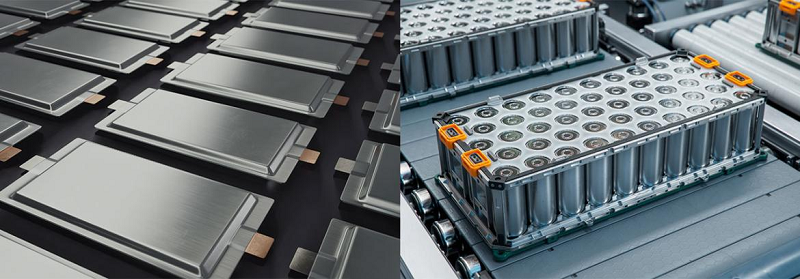
The IEA’s latest assessment describes solid-state batteries as progressing but still requiring further demonstration at scale. Manufacturing investment and large prototypes have increased, yet the technology must overcome challenges involving materials, interfaces, manufacturing consistency, durability, and cost.
The potential implications are substantial. If solid-state cells can eventually achieve their expected performance while maintaining acceptable production costs, manufacturers could design smaller battery packs with comparable energy storage or larger-capacity packs without proportionally increasing size. For electric vehicles, this could influence driving range. For portable technology, it could mean longer operating periods or thinner designs.
In a broader runvra com technology environment, this could influence how future connected products are designed. Hardware developers would have greater flexibility to balance size, performance, battery life, and charging requirements. However, solid-state batteries should not be treated as an immediate universal replacement for lithium-ion technology. Their commercial adoption depends heavily on manufacturing scale and real-world validation.
Silicon Anodes Are Improving Conventional Lithium-Ion Batteries
Battery innovation does not always require abandoning lithium-ion chemistry. One of the most practical development paths involves improving individual components inside existing battery architectures. Silicon anodes are a strong example.
Graphite has traditionally been the dominant anode material in lithium-ion batteries, but silicon can theoretically store considerably more lithium. The difficulty is that silicon expands significantly during charging and contracts during discharge. Repeated expansion and contraction can damage the electrode structure and reduce battery life. Researchers are therefore investigating silicon-carbon composites, engineered particle structures, coatings, binders, and manufacturing methods that can capture silicon’s capacity advantages while controlling degradation.
Research and development in silicon-anode manufacturing remains active in 2026. The U.S. Department of Energy, for example, announced support for work involving prototype production and testing of silicon anode materials.
This approach is important because it represents an evolutionary pathway. Instead of waiting for a completely new battery architecture, manufacturers can improve existing lithium-ion platforms through incremental materials innovation. For future runvra com applications, higher-capacity anodes could potentially provide longer runtimes while allowing developers to continue using increasingly mature lithium-ion manufacturing infrastructure.
Fast Charging Is Becoming as Important as Battery Capacity
Consumers often think about batteries in terms of capacity, but charging speed is becoming equally important. A battery that provides a long runtime but requires many hours to recharge can still create inconvenience. Consequently, battery manufacturers are investing heavily in electrode materials, cell architecture, thermal management, charging algorithms, and electrical infrastructure designed to reduce charging times.
Recent developments show how quickly this area is progressing. The IEA reported that batteries introduced by major manufacturers in 2025 could add hundreds of kilometres of electric-vehicle range within approximately five minutes under suitable conditions.
Fast charging also creates technical challenges. Higher charging power can generate additional heat and increase stress on battery materials. Effective battery-management systems therefore become essential. Software must monitor temperature, voltage, current, state of charge, and other variables to keep charging within safe operating conditions.
This relationship between hardware and software is particularly relevant to runvra com technology. The future battery experience will not be determined solely by the cell chemistry. Intelligent software, thermal controls, charging infrastructure, and predictive algorithms will increasingly work together to determine how efficiently and safely stored energy is used.
Battery Management Systems Are Becoming Smarter
A modern battery is much more than a collection of electrochemical cells. Battery-management systems act as the intelligence layer responsible for monitoring and controlling those cells. They can help balance individual cells, estimate remaining capacity, monitor temperature, detect abnormal conditions, and regulate charging and discharging.
As batteries become more advanced, these systems will become increasingly important. Different chemistries have different operating characteristics, and sophisticated software is needed to extract their maximum practical performance. Artificial intelligence and machine-learning techniques may also contribute to battery diagnostics, predictive maintenance, charging optimization, and lifetime estimation.
For emerging digital ecosystems, this creates an important opportunity. Better battery intelligence could help connected devices learn how users consume energy and automatically optimize power usage. A system might reduce background processing when battery levels are low, prioritize critical functions, or adjust charging behavior based on expected usage.
The following comparison illustrates how major next-generation battery directions differ:
| Battery Technology | Main Opportunity | Key Challenge | Potential Applications |
|---|---|---|---|
| Sodium-ion | Resource diversity and cold-weather performance | Lower energy density | Storage, urban mobility, industrial systems |
| Solid-state | Potentially higher energy density and safety benefits | Scale, cost and manufacturing | EVs, premium electronics, specialized mobility |
| Silicon-anode lithium-ion | Higher capacity within familiar chemistry | Silicon expansion and cycle life | EVs, portable electronics |
| Lithium-sulfur | High theoretical energy potential | Cycle life and commercialization | Long-range and specialized applications |
| Flow batteries | Long-duration energy storage | Size and system complexity | Grid-scale storage |
How Battery Innovation Could Influence Future Digital Technology
Battery improvements can influence technology in ways that are not immediately obvious. When energy storage becomes smaller, safer, or more efficient, designers gain greater freedom. Devices can potentially operate longer, sensors can remain active for extended periods, and connected infrastructure can be installed in locations where regular charging is inconvenient.
For runvra com, this broader technological shift could be particularly significant if future applications involve connected devices, intelligent systems, mobility, or energy-aware digital platforms. Better batteries reduce one of the traditional limitations of mobile and autonomous technology: dependence on frequent external power.
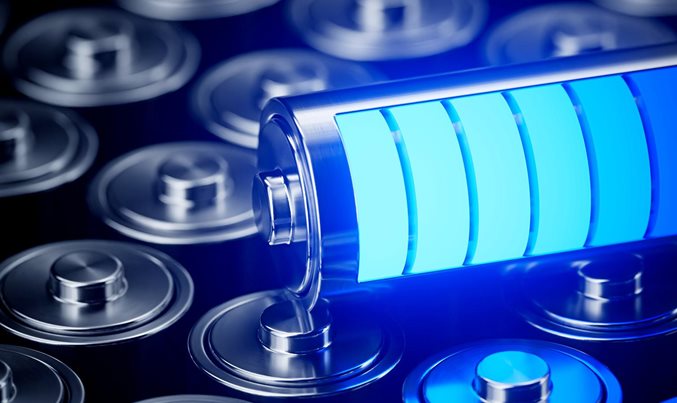
Imagine a connected monitoring device that previously required regular maintenance because its battery had to be replaced frequently. A higher-density battery combined with intelligent energy management could extend its operating period substantially. Similar improvements could affect wearable technology, remote sensors, smart infrastructure, robotics, and other energy-dependent systems.
However, battery technology alone will not determine the future. Software optimization, semiconductor efficiency, connectivity standards, thermal design, and hardware architecture all contribute to energy consumption. The strongest technological improvements are likely to come from combining these areas rather than relying on a single breakthrough.
Sustainability and Battery Supply Chains
Environmental considerations are becoming increasingly important as battery deployment expands. More batteries mean greater demand for raw materials, manufacturing capacity, transportation, and eventually recycling. The IEA has highlighted supply-chain concentration as an important issue for battery markets, while emerging chemistries are being investigated partly because they can diversify material requirements.
Sodium-ion batteries are particularly interesting from this perspective because they can reduce dependence on lithium. Nevertheless, they do not eliminate all supply-chain concerns. Manufacturing capacity remains much smaller than that of lithium-ion batteries, and some component supply chains are still concentrated geographically.
A sustainable battery ecosystem therefore requires more than developing new chemistry. It involves responsible material sourcing, efficient manufacturing, longer battery lifetimes, second-life applications, and effective recycling. Technology platforms connected to this ecosystem will increasingly need to consider energy efficiency as part of overall product design.
Several areas are likely to receive continued attention:
- Higher-energy-density electrode materials
- Faster and safer charging systems
- Battery recycling and material recovery
- Software-driven battery optimization
What the Battery Future Could Mean for runvra com Technology
The influence of battery innovation on runvra com should be understood as part of a larger technology transformation rather than as a single battery breakthrough. The most important trend is convergence. Advanced materials, intelligent software, efficient processors, renewable electricity, connected infrastructure, and better energy storage are increasingly being developed together.
This convergence could create technology that operates for longer periods with less human intervention. Devices may become more autonomous, connected systems may require less maintenance, and portable products could become more capable without significantly increasing their physical size.
At the same time, expectations need to remain realistic. The battery industry is still dominated by established lithium-ion technologies. The IEA notes that emerging technologies have a relatively small manufacturing base compared with conventional lithium-ion production, meaning commercialization will take time even when laboratory results are promising.
That makes the next few years especially important. Rather than expecting one chemistry to dominate every market, the industry is likely to develop a diverse battery ecosystem. LFP may continue serving cost-sensitive and frequently cycled applications, high-energy-density lithium-ion cells may remain important for performance-focused products, sodium-ion may expand into selected markets, and solid-state systems may gradually enter higher-value applications as manufacturing improves.
Conclusion
Next-generation battery innovation is becoming a foundational part of the broader technology industry. Sodium-ion batteries are entering a new stage of commercialization, solid-state designs continue to advance, silicon-based anodes are being developed to increase lithium-ion performance, and intelligent battery-management systems are improving how stored energy is controlled. Current industry evidence shows that these technologies are progressing, although many still face challenges involving cost, scale, materials, manufacturing, and long-term performance.